
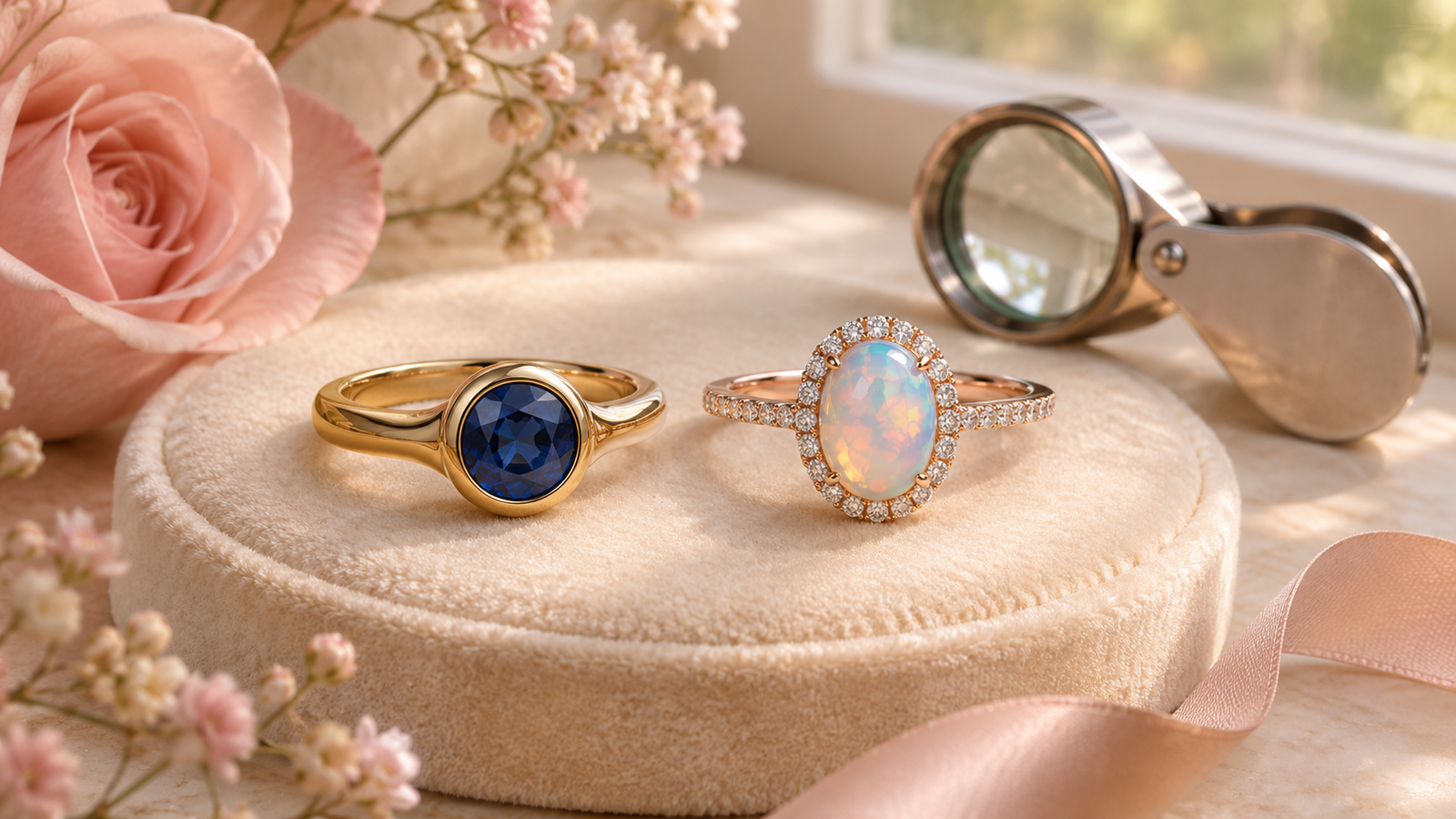
You find a vivid sapphire and a glowing opal in the same jewelry case. Both look beautiful, but you plan to wear the ring most days—at work, while running errands, and around the house. The useful question is not simply, “Which stone is harder?” It is, “How will this gem handle the way I actually wear a ring?”
Gem durability has three parts: hardness (resistance to scratches), toughness (resistance to chips and breaks), and stability (resistance to heat, light, and chemicals). The Gemological Institute of America (GIA) explains that these are separate properties, so a high hardness number alone cannot tell you whether a ring is carefree. GIA’s overview of gemstone durability is a useful starting point.
Start with how your hands spend the day
Think through an ordinary week. Do you remove rings for exercise, gardening, cleaning, or hands-on work? Do you often knock your hands against counters or equipment? Does the ring need to stay on through frequent handwashing? These habits matter because a ring stone sits exposed on a moving hand, where it may meet hard surfaces, grit, lotions, and household products.
There is no single gemstone that is right for everyone. A stone that suits someone who removes jewelry before chores may be a poor fit for someone who wants to wear the same ring continuously. Be honest about your routine before you compare color or price.
Use the three-part durability check
1. Hardness: how easily can the surface scratch?
Hardness describes resistance to scratching and abrasion. The familiar Mohs scale is comparative, and its numbers are not evenly spaced: the difference between two neighboring numbers is not a fixed amount. GIA notes that sapphire and ruby, both corundum, rank 9 on the Mohs scale and are relatively hard. That makes hardness one useful part of the comparison, but it is not the whole answer.
2. Toughness: how vulnerable is it to a knock?
Toughness describes resistance to breaking, chipping, or splitting. Ask where the stone has exposed corners, points, or edges, and whether the design shields them. A protective bezel or a setting with a raised rim can reduce how much of the gem is exposed to a direct bump. No setting makes a gemstone indestructible, but shape and protection can change the risks of everyday contact.
3. Stability: what can heat, light, or chemicals do?
Stability concerns how the gem responds to its environment. Treatments can change the care a stone needs. For example, GIA says untreated and heat-treated sapphires are durable, while some fracture-filled or dyed sapphires need gentler cleaning and protection from certain chemicals. Ask about the specific stone and its treatments before assuming that general advice for a gem variety applies to the ring in front of you.
Compare two very different ring choices
Sapphire: A sapphire can be a strong candidate for a frequently worn ring. GIA describes corundum as relatively hard, with excellent toughness and no cleavage, and says it is well suited to rings subject to daily wear. Still, the treatment matters. Ask whether the sapphire has been fracture-filled, cavity-filled, dyed, or treated in another way that changes cleaning or care.
Opal: Opal can be a lovely choice when its color play is what you love most, but it calls for more thoughtful wear. GIA notes that opal is less hard than many gems and is vulnerable to scratches and chips; for someone tough on jewelry, it recommends a protective setting or treating an opal ring as a piece that needs extra care. That does not make opal a bad choice. It means your habits and the setting should be part of the decision.
If you like a softer or more care-sensitive stone, consider whether you would enjoy wearing it on days when you can be mindful of it—or whether the same gem might suit a pendant better. The right answer is the one that fits both your taste and your routine.
Inspect the setting as carefully as the gemstone
Ask to see the ring from the side as well as from above. Notice whether the stone sits high, whether its corners or edges are exposed, and whether the band feels substantial enough for your use. Look for prongs that appear even and secure. A beautiful center stone still depends on a well-made setting to stay in place and avoid unnecessary knocks.
For an online purchase, request clear side-view photographs and a written description of the setting. Ask whether the seller recommends removing the ring for chores, sports, or cleaning, and what inspection or maintenance is included after purchase.
Questions to ask before you pay
- What is the gem variety, and is it natural, laboratory-grown, or an imitation?
- Has the stone been treated? If so, what treatment, and how does it affect care?
- How would you describe its hardness, toughness, and stability for my routine?
- Does this setting protect the gem’s corners, edges, or exposed surface?
- Which cleaning methods and products should I avoid?
- What should I do if a prong loosens or the stone appears chipped?
- Can I have the care instructions, treatment disclosure, warranty, and return terms in writing?
A practical choice, not a hardness contest
Before choosing, score each ring against your real life: scratch resistance, resistance to impact, sensitivity to environmental conditions, protection from the setting, and the care you are willing to give it. Then compare stones only after the seller has clearly explained treatment and maintenance. GIA’s sapphire care guide and opal ring durability FAQ show why two attractive gems can call for different habits and settings.
Further reading
- Gemological Institute of America (GIA): How to Protect Your Diamond from Chipping — Explains hardness, toughness, and stability, and why scratch resistance alone does not prevent damage.
- Gemological Institute of America (GIA): Sapphire Care and Cleaning Guide — Describes sapphire durability, treatments, and the care differences they can create.
- Gemological Institute of America (GIA): Is Opal Durable Enough for Rings? — Offers practical guidance on opal’s vulnerability and protective settings.


