
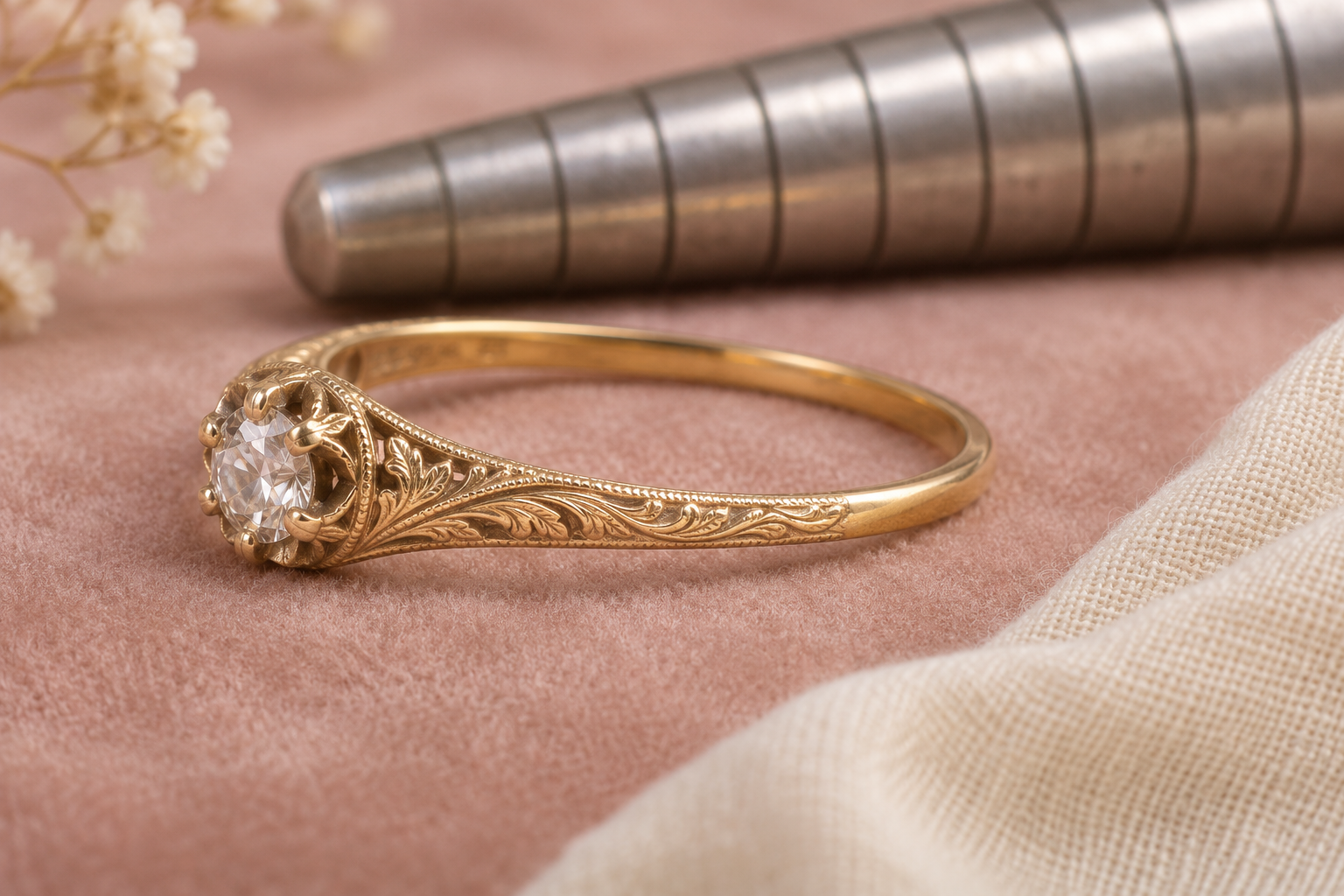
You find a vintage ring with the kind of engraving you’ve been looking for. The seller lists it as a size 5½. You usually wear a 7. Before you picture it on your hand, ask the seller to turn the ring over. The back of the band can tell a jeweler as much about the work ahead as the lovely part you saw first.
The question to ask is whether this particular ring can reach your size while keeping the details that made you want it. Get an answer about the work, the cost, and the return terms before you pay.
Ask to see the underside of the ring
The band that wraps around the finger is called the shank. For an online listing, ask for a sharp photo of the underside and another of the inside of the band. A photo can show where the pattern ends, whether there’s an inscription, and where the metal looks thin. The Gemological Institute of America’s guide to antique and vintage engagement rings explains that some vintage rings are difficult to resize, especially when the change is substantial, and that a worn shank sometimes needs partial replacement.
Point out the detail you most want to preserve. If it’s the engraving, ask where the jeweler expects to work and whether a plain section or a break in the pattern could be visible afterward. If it’s an inscription, ask whether the work would affect the letters. Photos help start that conversation. Ask whether the jeweler needs the ring in hand to give you a firm answer.
Have your size checked for the width you’ll wear
If you can, visit a jeweler and try on a sizing band similar in width to the vintage ring. Bring along any band you plan to wear with it and explain how you’d like the pair to feel. Tell the seller the size your jeweler measured, along with the sizing system you’re using. For a ring listed abroad, ask the seller to confirm the equivalent measurement.
Then ask whoever will do the work whether they can reach that size. If they say the ring needs more than a size adjustment, ask what else is involved. For example, the shop might want to inspect a worn section of the shank or check the prongs before quoting the job. It helps to know which work is included before you compare this ring with another.
Get the work and return terms in writing
The Federal Trade Commission’s jewelry buying guide recommends getting a seller’s refund and return policies in writing. With a vintage ring, ask specifically what changes once the band has been altered and whether you can have an independent jeweler inspect it first.
- What size can you bring this exact ring to, and what will the underside look like afterward?
- Does the quote include any other work the jeweler thinks the ring needs?
- Can I return the ring before sizing, and what are my options if it still doesn’t fit after the work?
A seller may need an inspection before answering. That’s a reasonable point to pause. You’re buying a ring you want to wear, and the work it takes to make it fit belongs in the decision alongside the engraving, the stone, and the price.
Further reading
- Gemological Institute of America (GIA), How to shop for antique and vintage engagement rings. See what a jeweler looks for in worn bands and prongs, and why substantial size changes can be difficult.
- Federal Trade Commission (FTC), Buying platinum, gold, and silver jewelry. Read about evaluating a jewelry seller, understanding metal marks, and checking return policies before paying.


